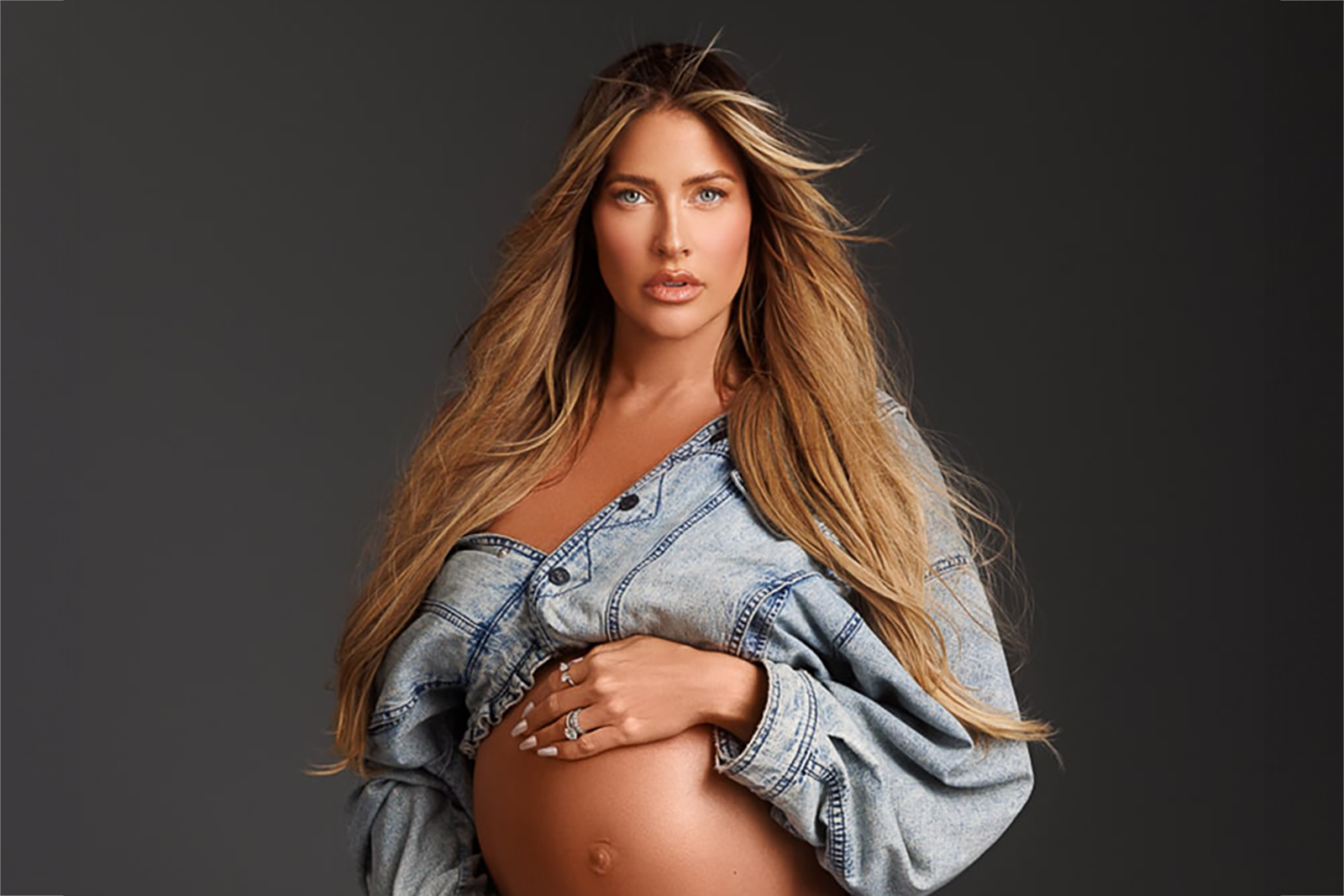
How to Start A Maternity Photography Studio in Los Angeles
Twelve years ago, when I opened my studio in Beverly Hills, maternity photography was usually just an add-on in portrait portfolios. I knew from the beginning that I wanted to do things differently.
Instead of photographing everything, I positioned myself as a specialist. I don’t shoot weddings, events, pets, or outdoor sessions. I focus exclusively on fine art studio maternity. When my clients welcome their babies, I refer them to trusted newborn and family photographers whose work and safety practices I believe in. Staying in my lane clarified my identity and strengthened my brand. It also allows me to educate parents with confidence on what to look for in newborn photography, especially when it comes to safety, studio standards, and experience.
When you niche intentionally, your brand becomes clear. Whether you’re transitioning from family photography, coming from baby photography, or entering the creative space with no portfolio yet, I’ll walk you through how to build a maternity photography studio in Los Angeles the right way.

Step 1: Define Your Signature Maternity Photography Style
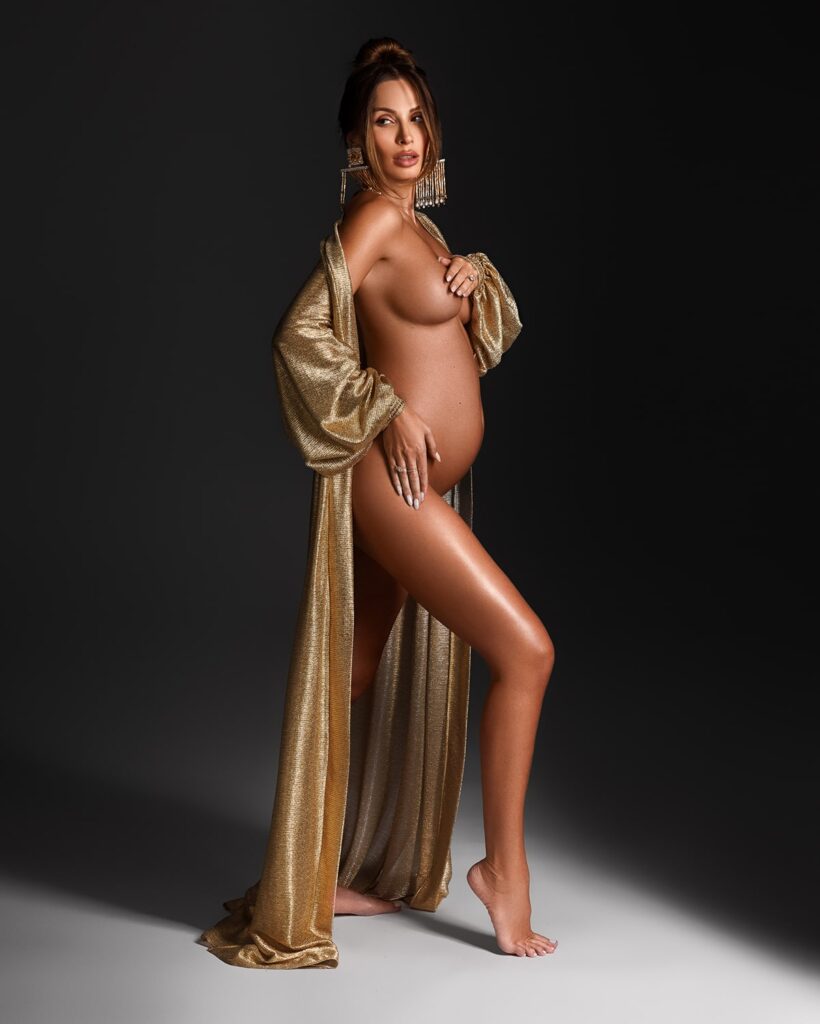
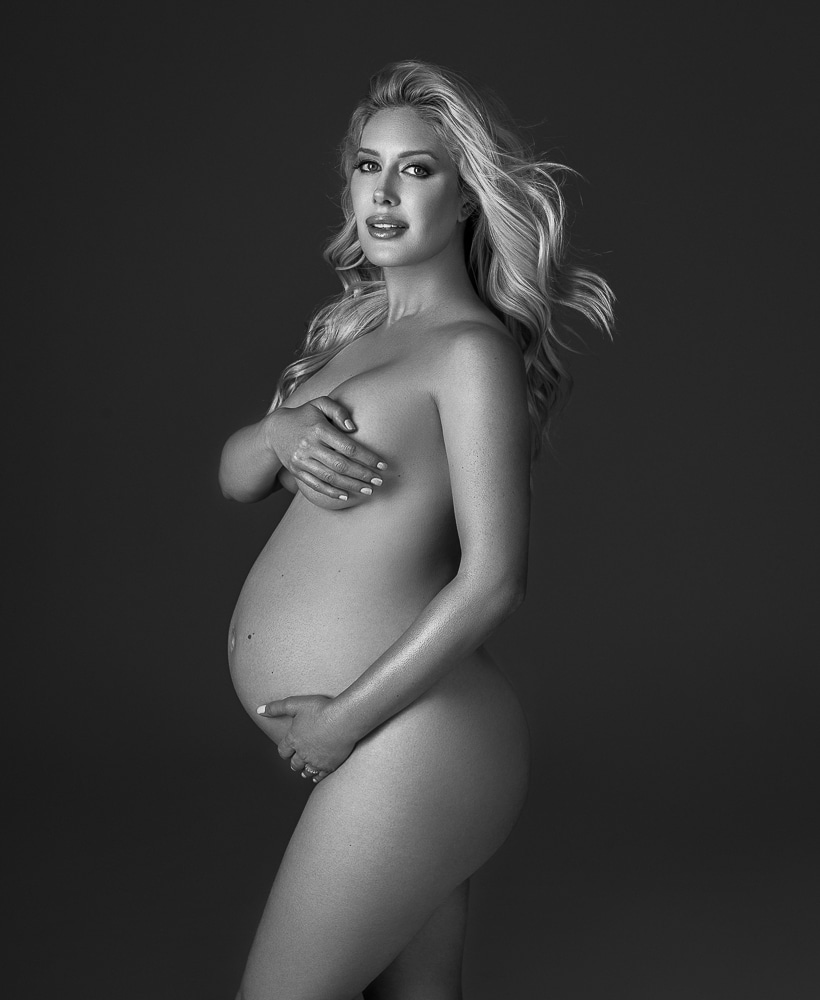
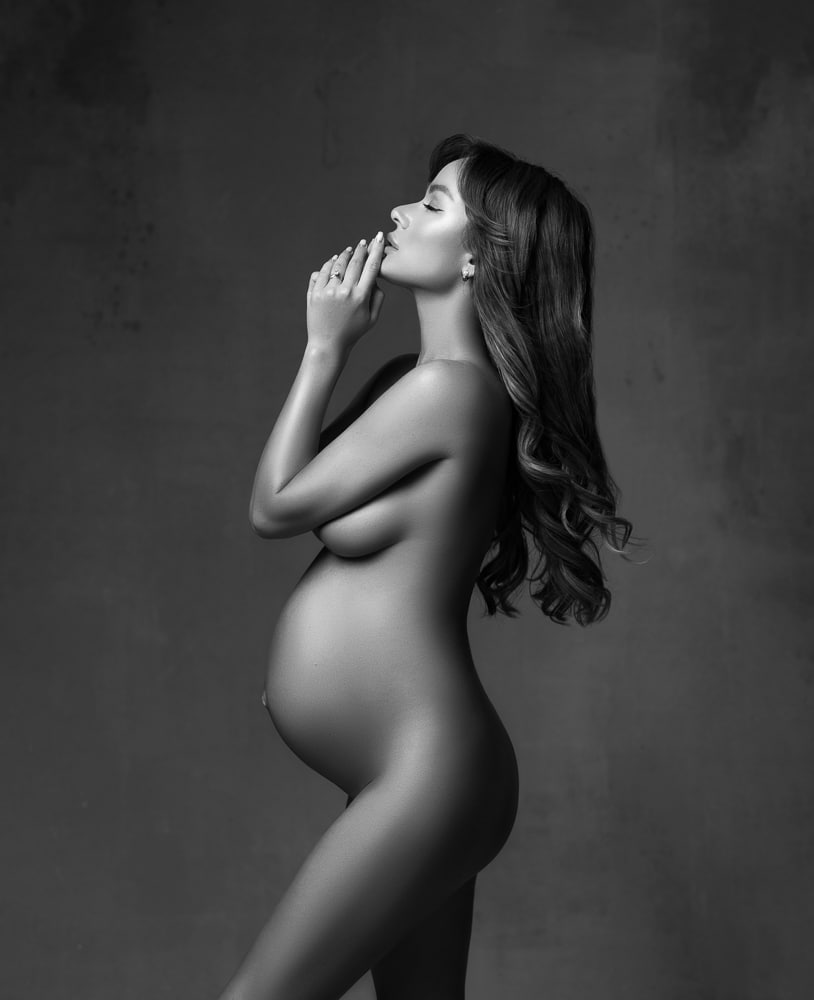
If I could hand new studio owners one lesson, it’s that mothers book emotion, not megapixels. The camera is a tool, the signature is you. Your style is how you see light, how you sculpt a pose, how you edit skin with restraint, and how you speak to someone who may not have felt glamorous in months. Consistency in editing is critical for brand recognition. When your black-and-white conversions, skin tones, and contrast live in the same family, your portfolio becomes unmistakable in a sea of photographers in your area. This doesn’t mean overusing presets or heavy Photoshop, it means a thoughtful approach to color, exposure, and retouching that flatters pregnancy without plasticizing it.
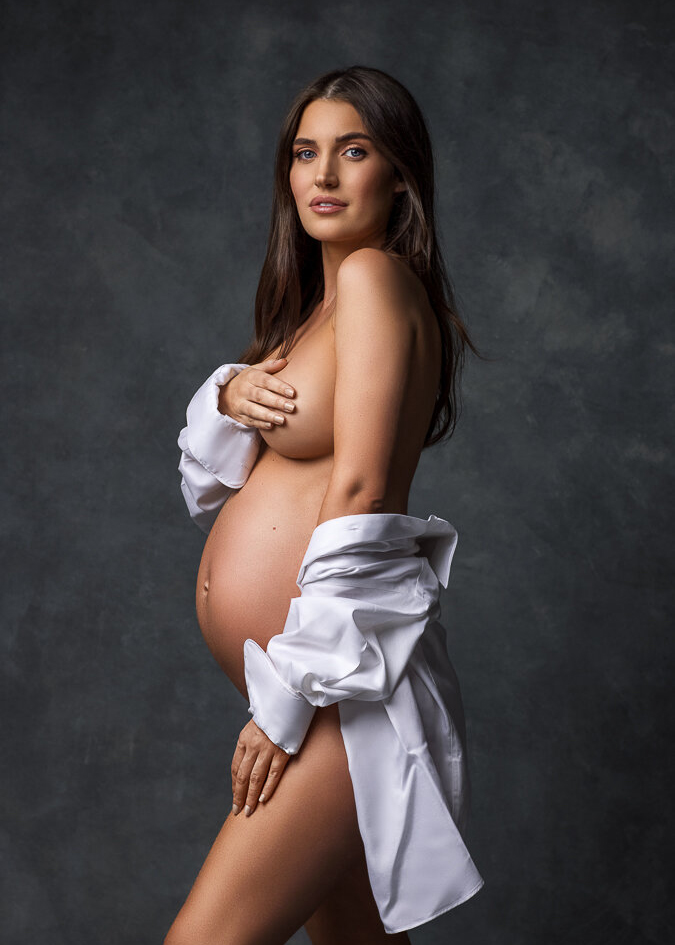
Maternity portrait photography rewards simplicity. I rely on classic compositions and clean backgrounds so the light and the subject do the talking. In my Beverly Hills studio, I use a combination of natural light and strobes, but the choices are always guided by emotion. Soft window light can wrap a figure like silk, a single large softbox can carve a timeless silhouette. Clients can’t name the modifier, but they feel the mood. That’s the point.
See 10 tips for your maternity photoshoot in Los Angeles here.
Building a Portfolio That Represents the Clients You Want to Book
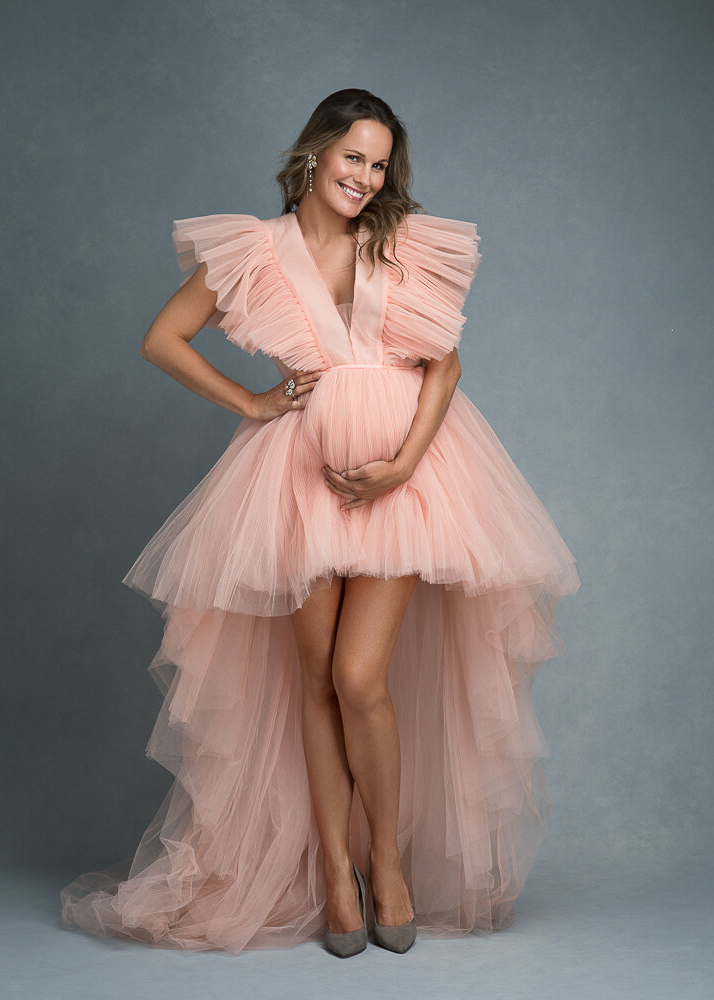
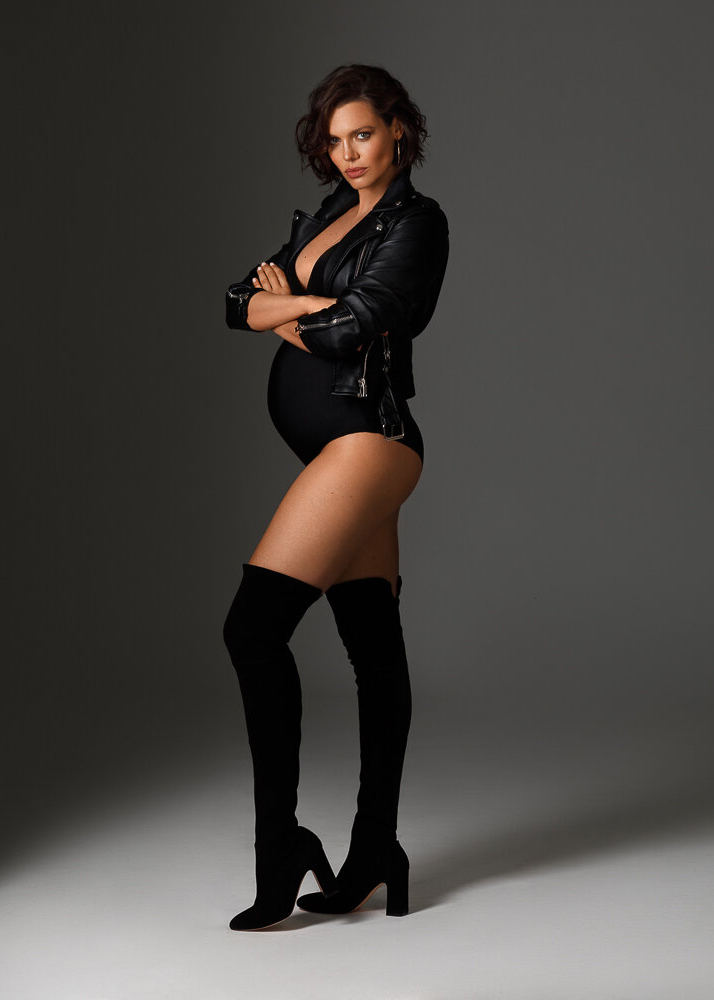
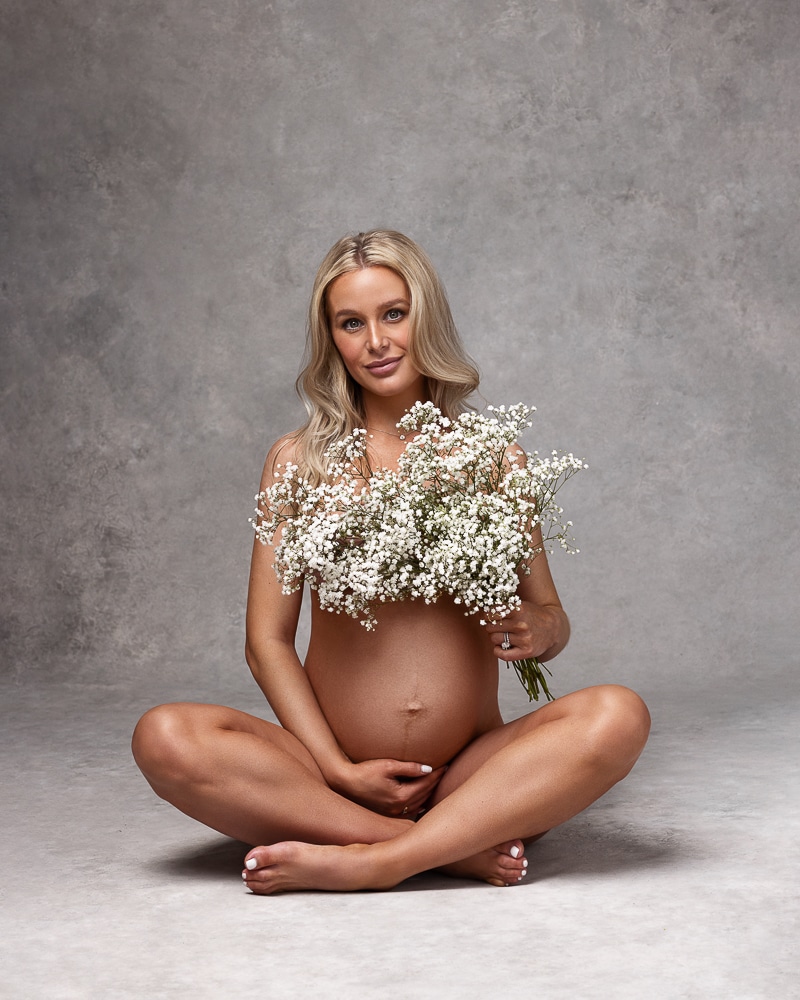
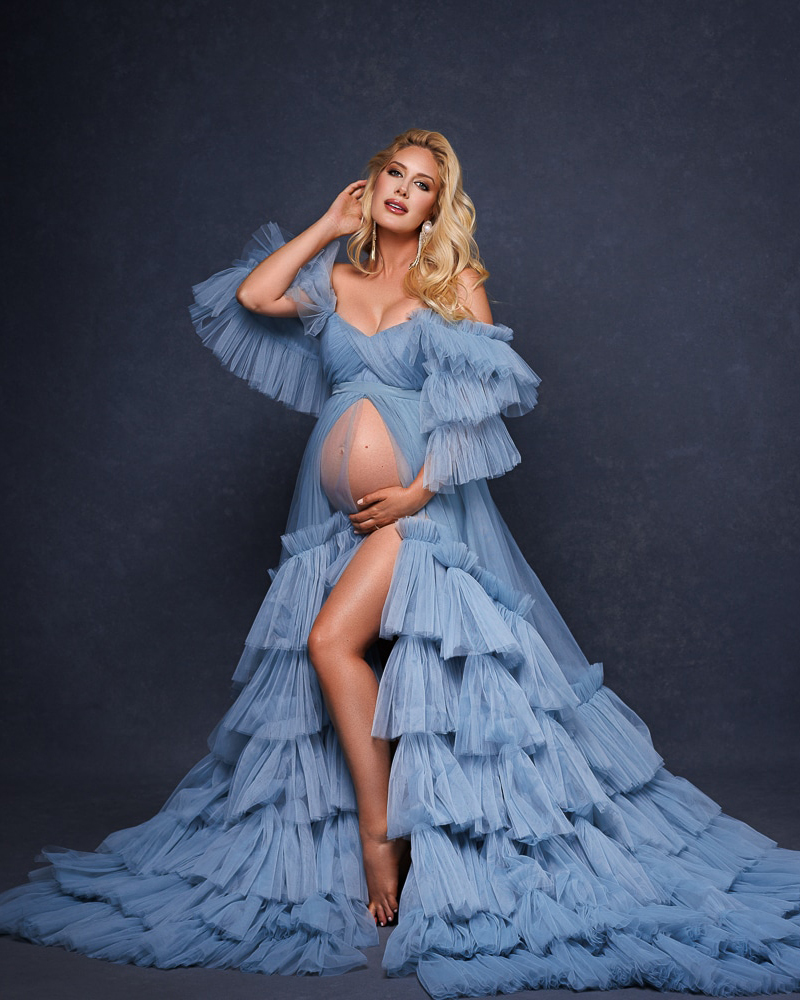
Before you announce grand opening, build a portfolio that looks like your dream calendar. If you want editorial maternity with couture gowns, collaborate with a stylist and have a clear creative direction. Make sure you include diverse body types and skin tones, and experiment with lighting setups that show range, natural light for softness, controlled strobe for drama, and a mix to demonstrate versatility. Keep the photographs cohesive, it should like you’re curating a story.
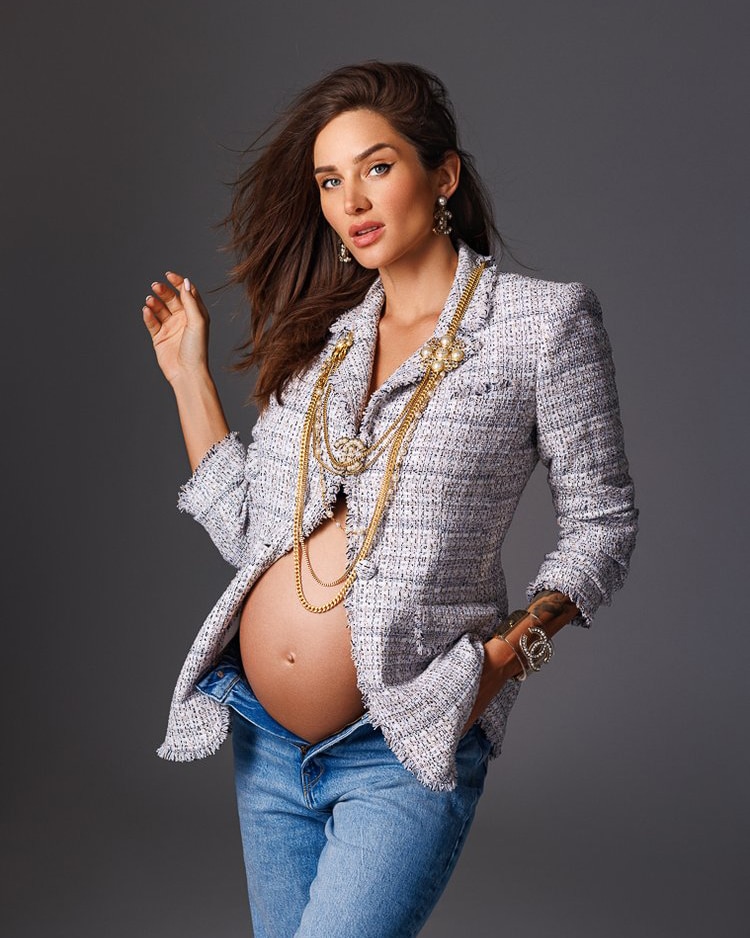
Be intentional about props. In maternity work, a prop should serve the portrait, not distract from it. A silk drape, a statement necklace, or a textured throw can be enough. Building a portfolio is not a numbers game, it’s a clarity game. Show only your strongest work and your booking calls start with, I love your style, which is music to any photographer’s ears.
Step 2: Create a Professional Website That Converts Photography Clients
For outdoor pregnancy photographers, timing is just as crucial as lighting. A great maternity session isn’t just about chasing ideal light, it’s about creating an environment where she feels relaxed and confident. While golden hour might look stunning, if it means she’s standing in extreme temperatures or battling unpredictable weather, the session will suffer. That’s why studio maternity photography eliminates this struggle entirely. In a controlled indoor setting, lighting can be perfected with softboxes, reflectors, and large studio windows, creating that same golden-hour glow without the discomfort of standing outside at sunset in sweltering heat or freezing winds.
The best images come from prioritizing her experience over rigid lighting preferences. Whether it’s adjusting the time of day for softer, even light or choosing a studio setup that flatters her naturally, the key is working with what makes her feel her best.


Step 3: Choosing the Ideal Photography Studio Location in Los Angeles
Los Angeles can be an obstacle course when you’re pregnant, so choose a studio space that reduces friction. Do not rent a photography studio located on a hill with tricky parking and stairs.
Clients should arrive, park easily, take an elevator or walk in at ground level, and breathe immediately. Air conditioning is non-negotiable. Even in the cooler months, pregnancy runs warm, and your lighting setup can add heat to the room.
A calm arrival sets the tone for a calm session and a better portrait. If you’re evaluating commercial studio space, visit at the time of day you’ll shoot, test the route from car to door, and imagine carrying gowns, backdrops, and a newborn baby if a family arrives with a little one in tow. Accessibility is client care, and client care is the backbone of a profitable business.
See top reasons why moms-to-be will consider an in studio pregnancy photoshoot here.
Designing a Welcoming Client Experience in Your Studio
Step into your foyer as if you’re nine months pregnant and a bit nervous about being photographed. That thought experiment will change your floor plan. Provide a comfortable sitting area, a private dressing room with a full-length mirror, robes, and thoughtful amenities, and keep refreshments available without turning the space into a café.
Temperature control should be precise and quick to adjust. Restrooms must be spotless. Keep the set area open and uncluttered so lighting and lens changes are smooth. The entire environment should make them feel like they’re taken care of. When the space works this well, your client experience becomes your strongest referral engine.

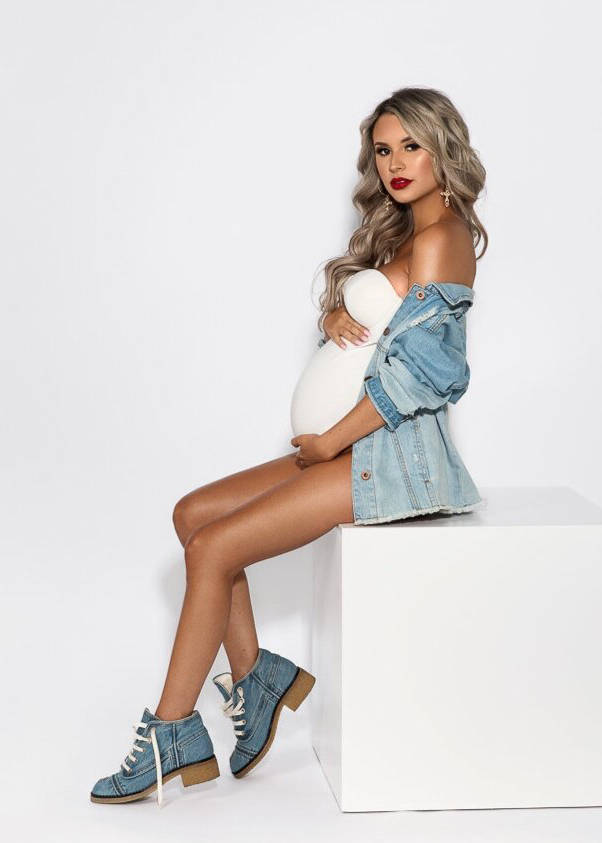
Step 4: Designing Your Studio for Professional Maternity Photography
Lighting is your paintbrush. For maternity, I design light to sculpt shape and celebrate texture. Natural light can be heavenly in LA, but I treat it as a choice, not a crutch. North-facing windows give consistent illumination, sheer curtains become giant diffusers, white walls act as bounce.
When natural light doesn’t cooperate, strobes allow total control. A large octabox or parabolic placed slightly above and to the side creates a long, flattering gradient across the belly and face. I pay constant attention to the direction of light because it defines the mood: side light for drama and silhouette, front wrap for softness, feathered light for a silk-like sheen on skin.
For lenses, I gravitate to an 85mm for classic compression and a 50mm for intimacy and full-length work in tighter studio space. Primes force me to move, which improves pose coaching. A 24–70mm is my insurance policy for versatile framing when I’m in flow. Whatever you choose, make it yours and practice until you can change the whole feel of a set in sixty seconds.
See my full artcile on mastering maternity photography lighting here.
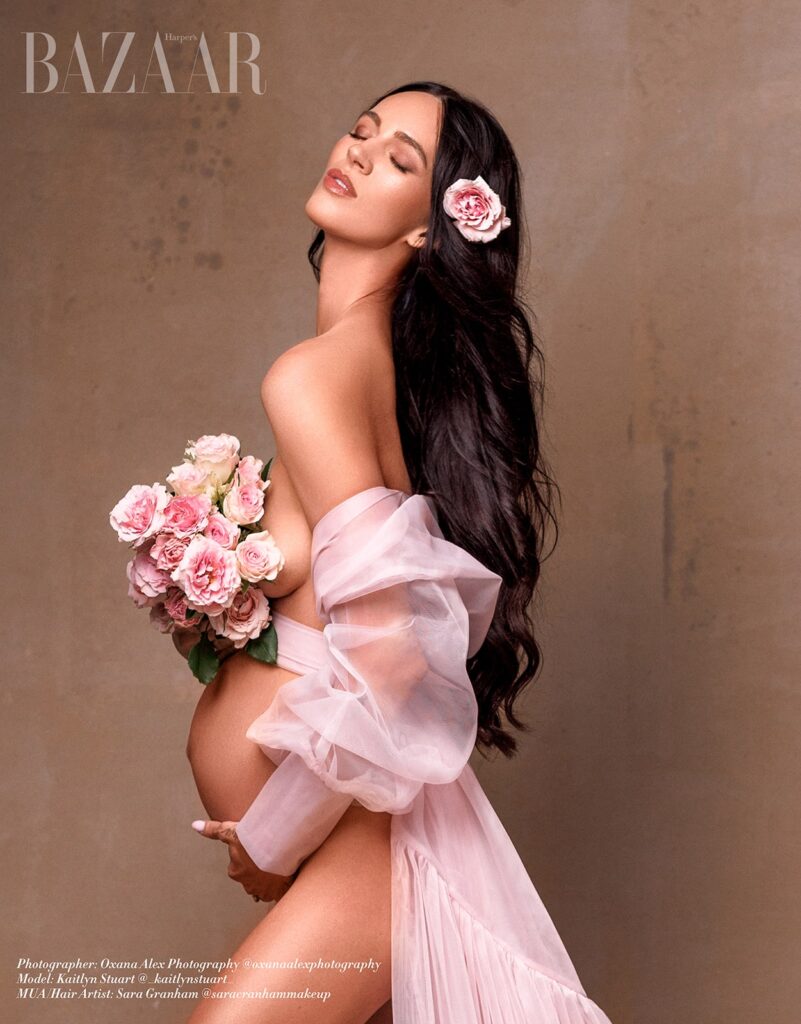

Selecting Backdrops & Space Layout
Backdrops are the stage, not the star. I keep a palette of textured neutrals and a deep charcoal because they honor skin and fabrics while letting the light do the storytelling. The layout moves in a circle, wardrobe and prep flow into set one for natural light, then set two for strobe, then a seated area for a brief break while I stage the next look. C-stands live against the walls, clamps are within reach, and power is taped down and tidy. The goal is to make equipment disappear from the client’s awareness while you stay fully in control.
Necessary Equipment for a Smooth Workflow
Keep a reliable core kit and resist the urge to overbuy. A pair of strobes, a large soft modifier, a reflector, and a strip box can cover ninety percent of maternity looks. Add a sturdy rolling rack for wardrobe, a powerful steamer, a full-length mirror, and a simple posing stool with a back. Sandbags on every stand are part of your liability prevention, and gaffer tape is your best friend.
I carry spare camera batteries, tether cables, lens cloths, and a backup body because a professional is ready for anything. Necessary equipment isn’t about owning everything you see on social media, it’s about owning the right things and mastering them.
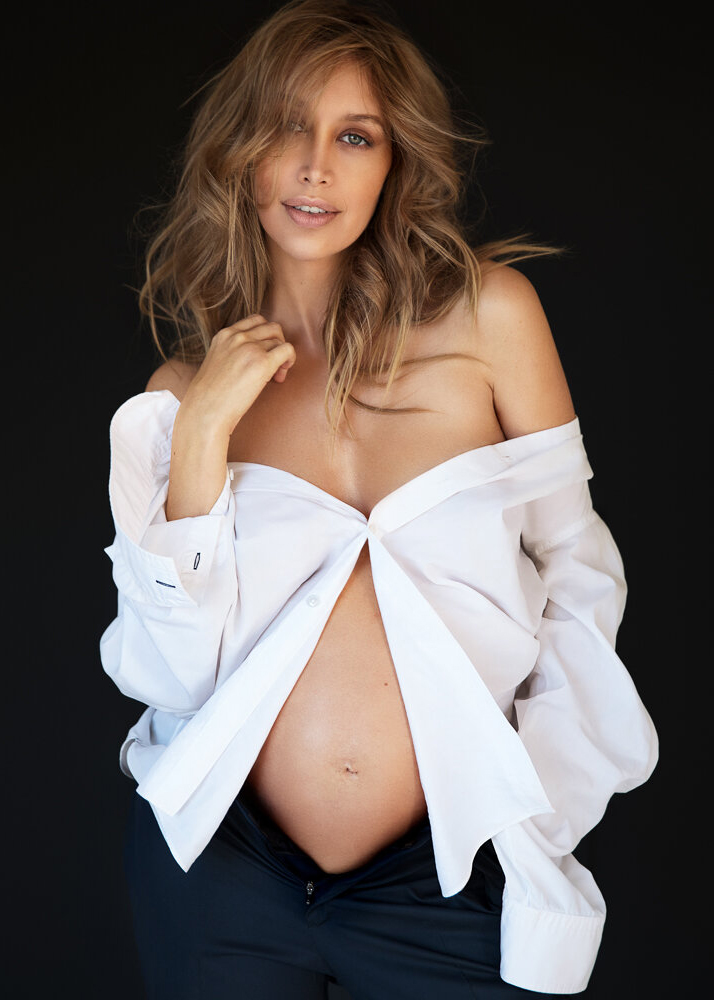

Step 5: Curating a Luxury Maternity Wardrobe for Your Photography Business
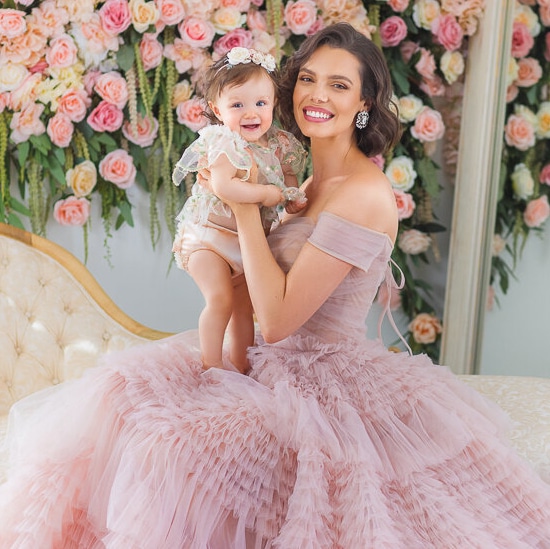
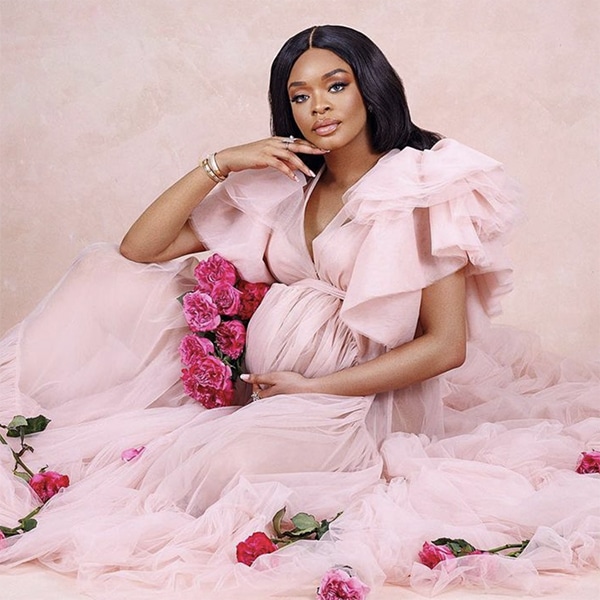
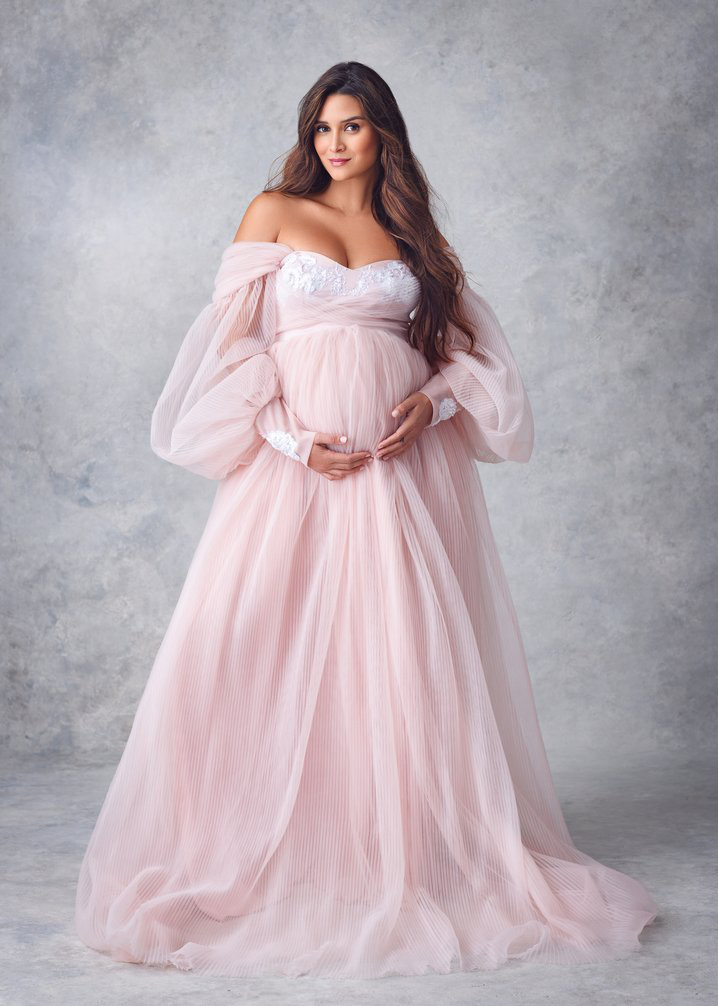
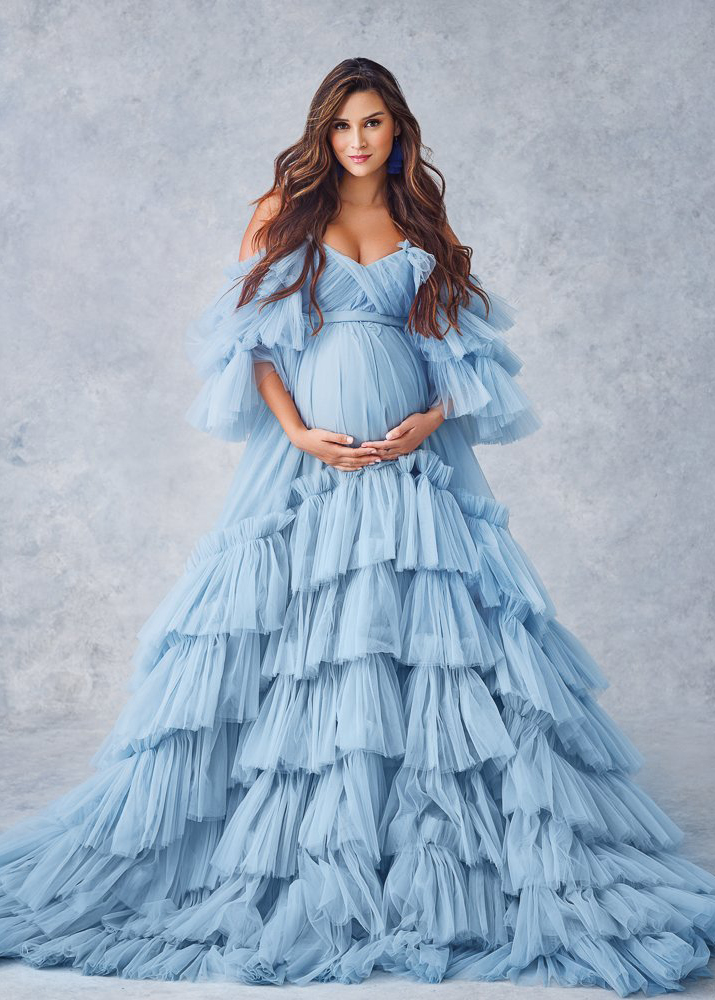
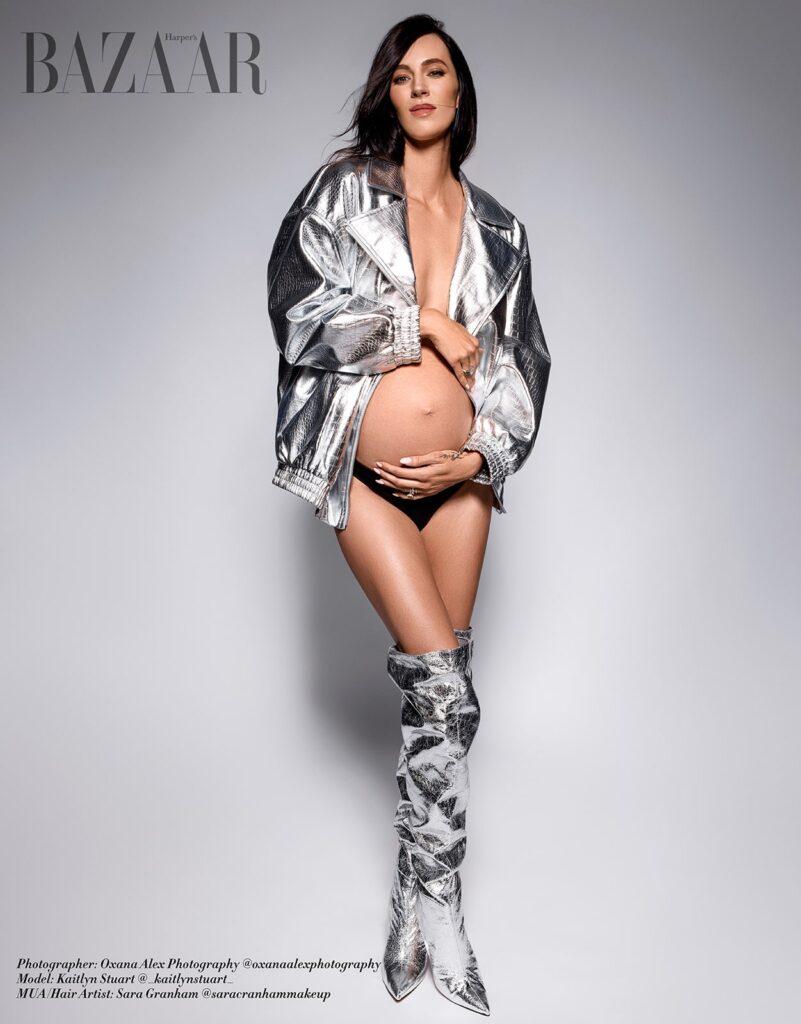
Wardrobe is one of the strongest value signals in maternity photography. When clients look at your portfolio and see gowns, draping fabrics, and beautifully styled looks, they know the experience itself will feel elevated. Offering a curated wardrobe eliminates the stress clients often feel trying to shop for outfits that work with their changing body. It also gives you control over color, texture, and silhouette, which directly improves the final images.
At my Beverly Hills studio, I include designer wardrobe, jewelry, and accessories for every session at no additional cost. This single detail dramatically increases booking confidence. Clients immediately understand that they don’t need to invest time hunting for the right pieces, they simply show up and are taken care of. That emotional ease is priceless.
What to Include in a High-End Maternity Photography Wardrobe
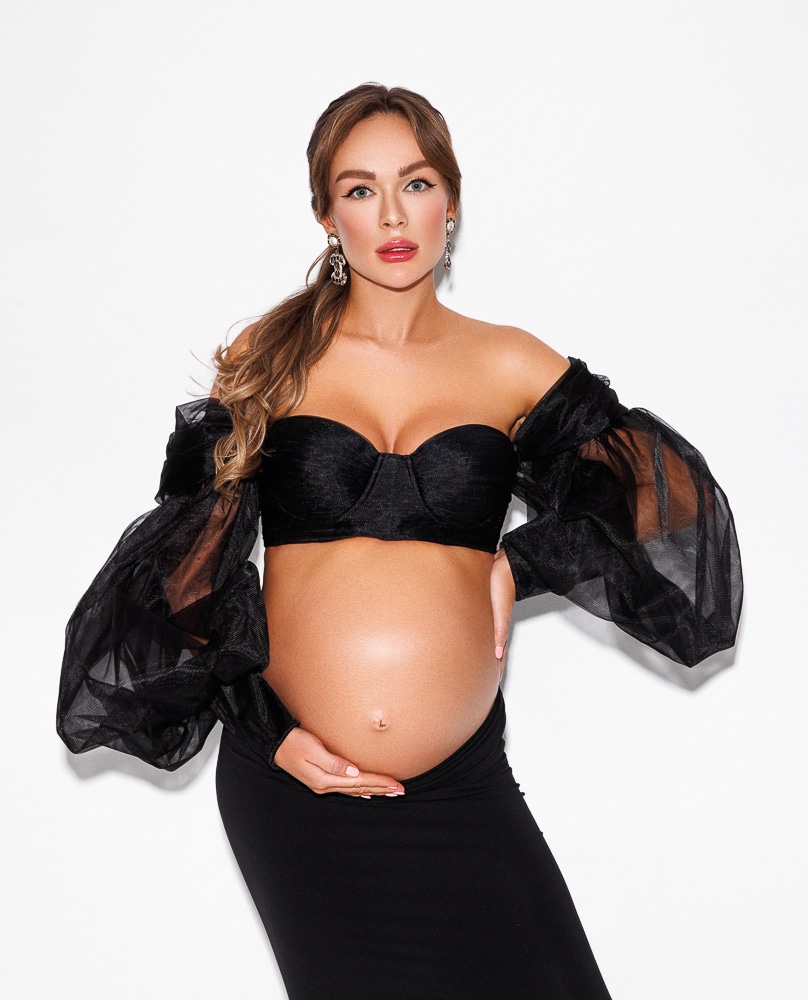
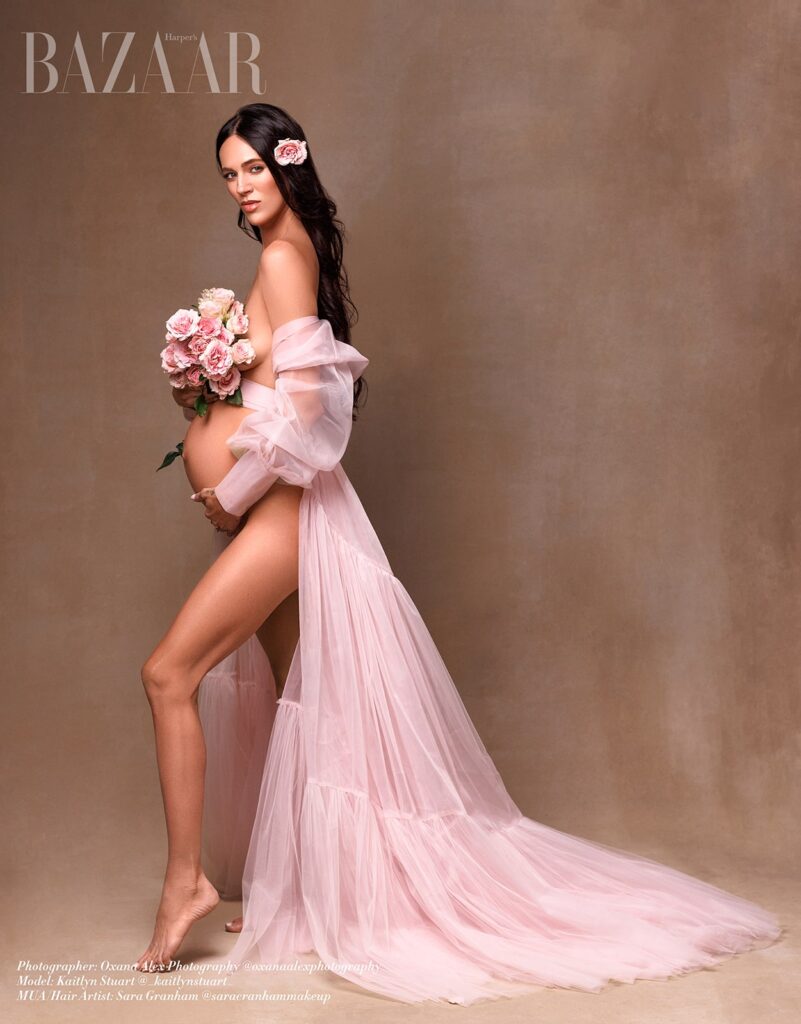
Couture gowns with structure photograph beautifully because they enhance the shape of the belly and add drama. Lace robes offer softness and romance. Structured bodysuits highlight shape in a clean and modern way. And silk draping fabrics allow endless creative variation, they move beautifully, catch the light gracefully, and allow for portraits that feel uniquely personal.
Accessories such as bold earrings, delicate rings, or a statement cuff bracelet can bring elegance and intentionality into the portrait. Jewelry photographs incredibly well because it catches highlights and adds visual rhythm.
Presentation, Care, and Hygiene
Presentation matters. Your wardrobe area should feel like a boutique, not a closet. I hang gowns on velvet hangers arranged by color. Jewelry is laid out with intention, not tangled in a tray. There is a full-length mirror, space to breathe, and no rush. The experience of choosing what to wear should feel playful, uplifting, and celebratory.
When a client slips into a gown and sees herself glowing in the mirror, shoulders soften, chin lifts, and confidence blooms. And that is when the true portraits happen, not when the shutter clicks, but when she begins feeling beautiful in her own skin.
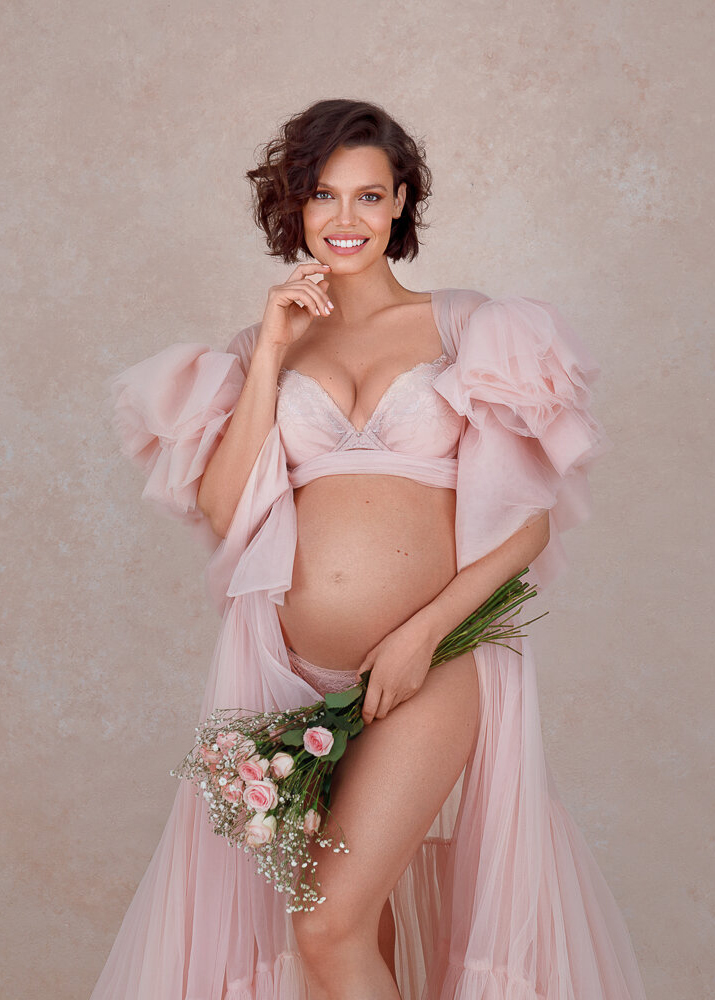
Step 6: Mastering Posing & Client Communication During Photography Sessions
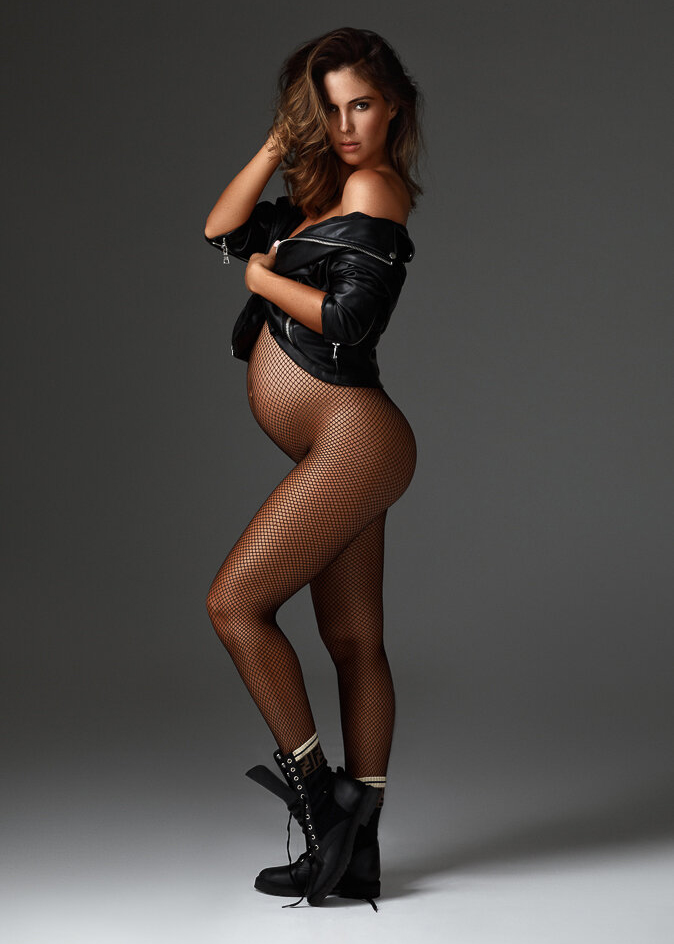
Posing is where your photography skills meet empathy. Pregnancy changes balance, flexibility, and comfort. I never ask for poses that strain the lower back or require excessive twisting. I start with foundation, grounding the feet, distributing weight, lengthening the spine gently. I watch hands closely, they tell a story. Hands should always feel natural, never stiff.
Every pose is guided. I demonstrate, I reassure, I celebrate small shifts. The more supported your client feels, the more gracefully she will move.
Working With Couples & Siblings
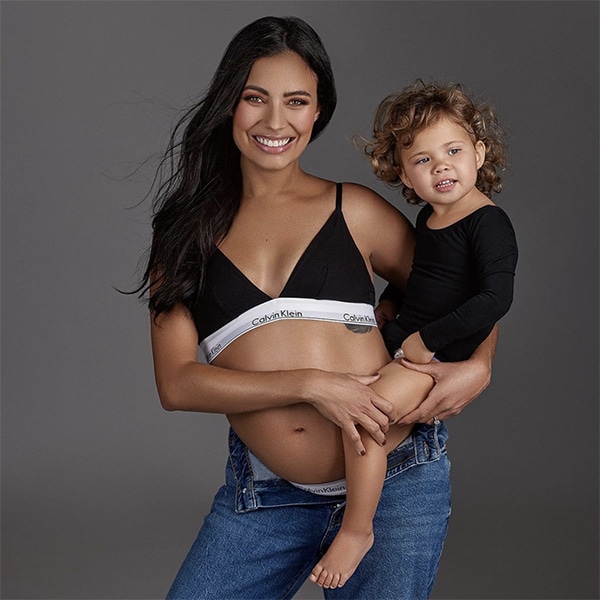
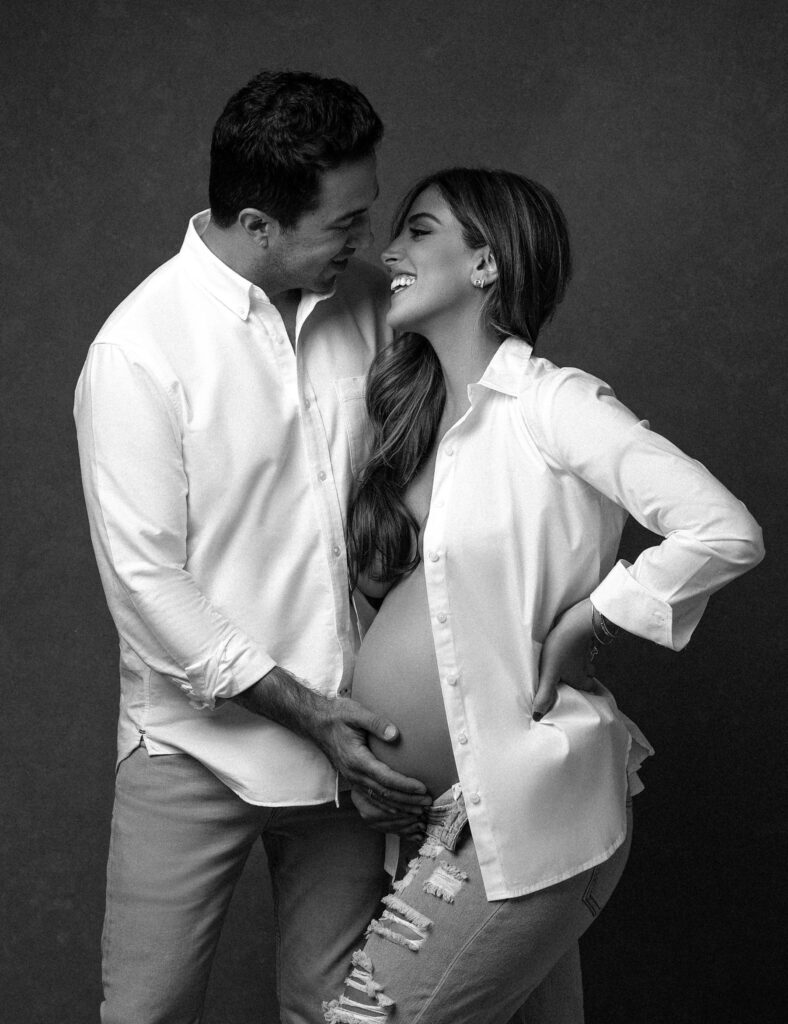
Couples bring tenderness and intimacy. Siblings bring energy and unpredictability. The key is to keep the mother at the center. I guide partners to support, not overshadow. I let children be themselves and work their personalities into the rhythm of the session. When the family dynamic feels honored, the portraits feel true.

Step 7: Pricing That Reflects Your Experience & Brand
Pricing is a reflection of your confidence and your clarity. Calculate your costs, studio rent, insurance, equipment, wardrobe investment, editing time, and your actual living needs. This business requires financial self-awareness to remain sustainable. Pricing is not about what others charge, it’s about what allows you to run your business without burnout. When your pricing is transparent and aligns with the quality of your client experience, you attract clients who value what you offer.
Step 8: Marketing Strategies for a Successful Maternity Studio
In Los Angeles, your next client often finds you through a Google search or an Instagram reel a friend shared. Make sure your website reflects what people actually look for, in this case a maternity photography studio in Los Angeles. Create content that educates, not just advertises. Share behind-the-scenes stories about lighting techniques, your approach to newborn versus maternity work if you shoot both, and tips that others can learn from.

Networking With Complementary Prenatal & Newborn Photographers
You can build genuine relationships with doulas, midwives, OB/GYN offices, prenatal yoga studios, newborn boutiques, and postpartum wellness centers. These professionals care deeply for mothers during one of the most vulnerable and joyful seasons of their lives, and when they refer a photographer, it’s because they trust the space and experience that photographer provides.
Another thing that works is to refer out. Like I mentioned above, for me, If a client asks about newborn photography and I do not currently shoot studio newborn sessions, I refer to a newborn photographer I love. That mutual respect strengthens the local photography community and keeps the business ecosystem healthy and supportive rather than competitive.
Standing Out in a Highly Competitive Market
Your niche is your superpower. Lean into what you do best and speak plainly about it. If you are studio-only like I am, explain why for example control of light, comfort, privacy, and a curated wardrobe that elevates every photograph. If someone asks about in-home sessions, be kind and clear about your boundaries, and offer a referral if appropriate. When your brand has a point of view, you attract clients who value it.


Step 9: Client Experience From Inquiry to Delivery
From the first email, I let clients know what to expect, how to prepare skin and hair, and how we’ll choose wardrobe together. I address common questions about timeline, parking, and comfort.
On session day, I walk them through the plan and reassure them that I’ll direct every pose. I move from softer natural light looks to more sculpted strobe work so the session has rhythm. Music stays low and soothing. I keep the set tidy so lens swaps and lighting tweaks are nearly invisible. Throughout, I check in, how are you feeling, do you need a break, would you like to see a few images on the monitor? That partnership creates honest expressions that reflect in the photos.

Lastly, Keep Learning and Be Organized
Track income and expenses monthly so nothing slips through the cracks. Keep a simple dashboard for bookings, session dates, deliverables, and orders. Staying organized is what protects you from double-booking, forgetting to send galleries, or losing track of edits, because schedules can get hectic fast, especially as your photography business grows. When everything has a place, your mind stays clear and your client experience stays consistent.
Review pricing twice a year and adjust as your costs or experience change. Make time for ongoing learning, because experienced photographers stay curious. If Photoshop still feels overwhelming, you can schedule a workshop. If lighting techniques still intimidate you, practice once a week until your movements feel natural. Growth doesn’t happen by accident. You build into it, intentionally, with patience and practice.


How do I start building a photography portfolio that attracts the right clients?
Start by creating a portfolio that reflects the exact style and client experience you want to be known for. Focus on consistency rather than quantity, and collaborate with mothers who represent diverse looks and body types. Your portfolio should feel curated and intentional. As you grow, your portfolio becomes a core part of your business plan and influences how you price your services and speak to your new family clients.
What should I look for when choosing a photography studio space?
Choose a studio space that is comfortable, easily accessible, and allows you to control lighting. Avoid cramped or inconvenient spaces, clients need to feel relaxed. A professional newborn photography studio or maternity-focused studio should have clear walkways, temperature control, and room for wardrobe changes. A thoughtful studio space since the beginning will set the tone for a successful newborn or maternity business.
Do I need natural light or can I use studio lighting?
You can use either natural light or studio lighting, both can be beautiful when used intentionally. Natural light is soft and organic, while strobes give you full control. Many studios use a combination. The goal is to master the direction of light on the body to sculpt curves and shape emotion. Lighting is a core skill that your photography business requires ongoing practice in.
What necessary equipment do I need to start?
Start with a reliable camera body, a portrait lens (like an 85mm or 50mm), seamless backdrops, one or two strobes or softboxes, and a posing stool. You do not need everything at once, invest slowly and intentionally. Growth is steady when equipment enhances your workflow rather than complicates it.

I want to add newborn photography, what should I know first?
Newborn photography requires safety training, temperature awareness, and patience. If you expand into a newborn photography business, you may need to adjust your studio space to include soft surfaces, newborn posing tools, and sanitation protocols. Newborn photos are often a family’s first heirlooms, so creating a calm, safe environment is key for a successful newborn experience.
How do I price my photography sessions with confidence?
Your pricing should reflect time, talent, wardrobe investment, editing, studio expenses, and the emotional value of your work. Price your services based on what allows your business to remain sustainable, not what others are charging. A clear business plan helps you avoid underpricing and ensures you build a profitable business rather than just breaking even.
How can I improve my client experience?
Communicate clearly, guide confidently, and make your sessions feel effortless. Send prep guides, provide wardrobe support, and pace the session slowly. A strong client experience is what leads to referrals, the most natural and genuine form of marketing strategies in a service-based photography business.
How do I get consistent booking in a competitive market?
Focus on connection, not just promotion. When clients feel genuinely cared for, they share their experience. Social media storytelling, referrals from prenatal care providers, a polished portfolio, and clear messaging all work together. When your brand feels personal and trustworthy, booking grows organically.

Conclusion
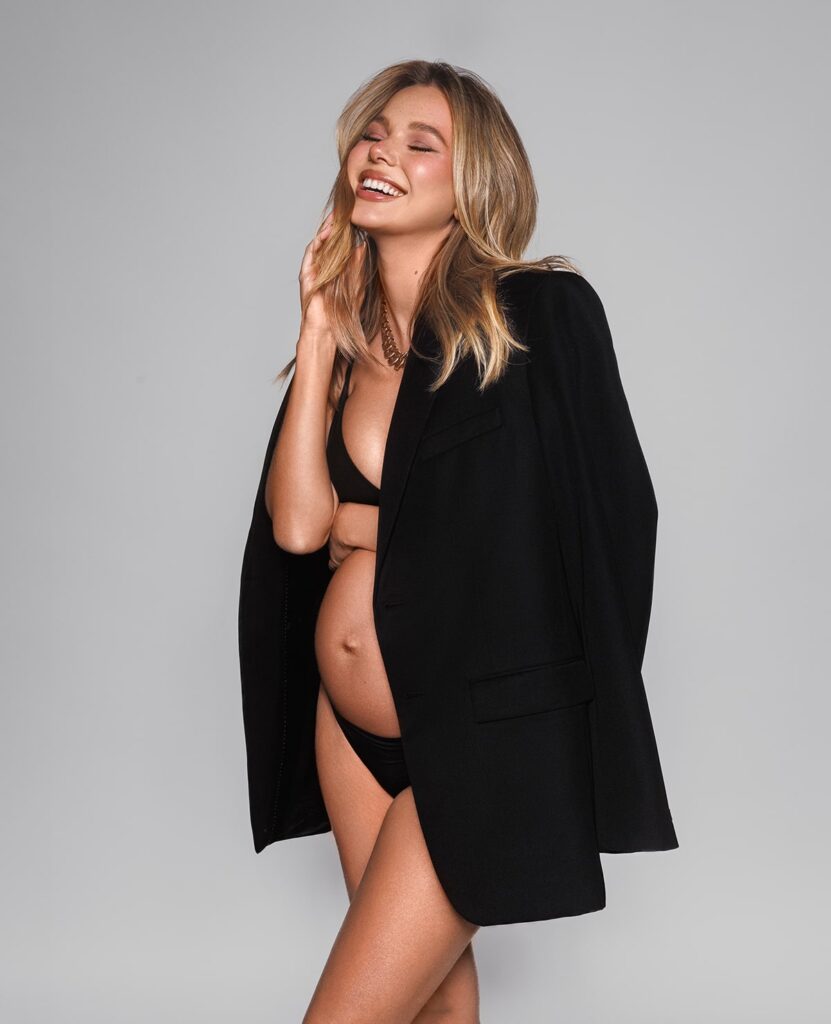
Your maternity photography studio is more than a business, it’s a sanctuary where women step into their strength, beauty, and transformation. You are honoring a season that will never happen in exactly the same way again. You are creating space for pause, reflection, connection, pride, softness, and joy.
This work asks you to be an artist, yes, but also a guide, a listener, a calm presence, and a steady hand. When you commit to a clear style, create a welcoming studio space, master light and posing, and care deeply about the client experience, everything begins to align. Pricing feels more natural, trust grows, and your business becomes sustainable.
Los Angeles will always be competitive and full of photographers, but there is only one you.
Lead with empathy, keep learning, and let every portrait reflect the beauty and meaning of this remarkable chapter in your client’s life.
How do I schedule my session?
You can schedule your session by emailing [email protected] or by texting our studio at (310) 854-9695.